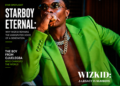



Some artists make music. Wizkid built a bridge, carrying the street sounds of Lagos to the rest of the world and making them a common language.

Born Ayodeji Ibrahim Balogun on 16 July 1990 in Ojuelegba, in the Surulere area of Lagos, he began recording at 11. He never waited for the world to come to him; he went to it. Two decades on, he is Nigeria’s biggest musical export and one of the defining artists of his generation.
The making of a star
Wizkid broke through with “Holla at Your Boy,” the lead single from his debut album Superstar (2011). It made him a star at home. What followed was patient, deliberate ambition aimed well beyond Nigeria.
In 2016, “One Dance,” his collaboration with Drake, reached number one on the US Billboard Hot 100 and topped the charts in 15 countries, including the United Kingdom, Canada, Australia, France and Germany. It held the top of the Hot 100 for 10 weeks and spent 15 weeks at number one on the UK Official Singles Chart. By then he had spent half his life building toward that moment.
Made in Lagos
Wizkid signed a multi-album deal with RCA Records in March 2017. Then, in October 2020, came Made in Lagos, which reached number one on the Billboard World Albums chart. Its single “Essence,” featuring Tems, was the first Nigerian song to enter the Billboard Hot 100 and the Billboard Global 200. With the Justin Bieber remix it peaked at number nine on the Hot 100, at the time the highest position any African act had reached on that chart. Made in Lagos has now appeared on the World Albums chart for six consecutive years, the first African album to do so.
The Grammy
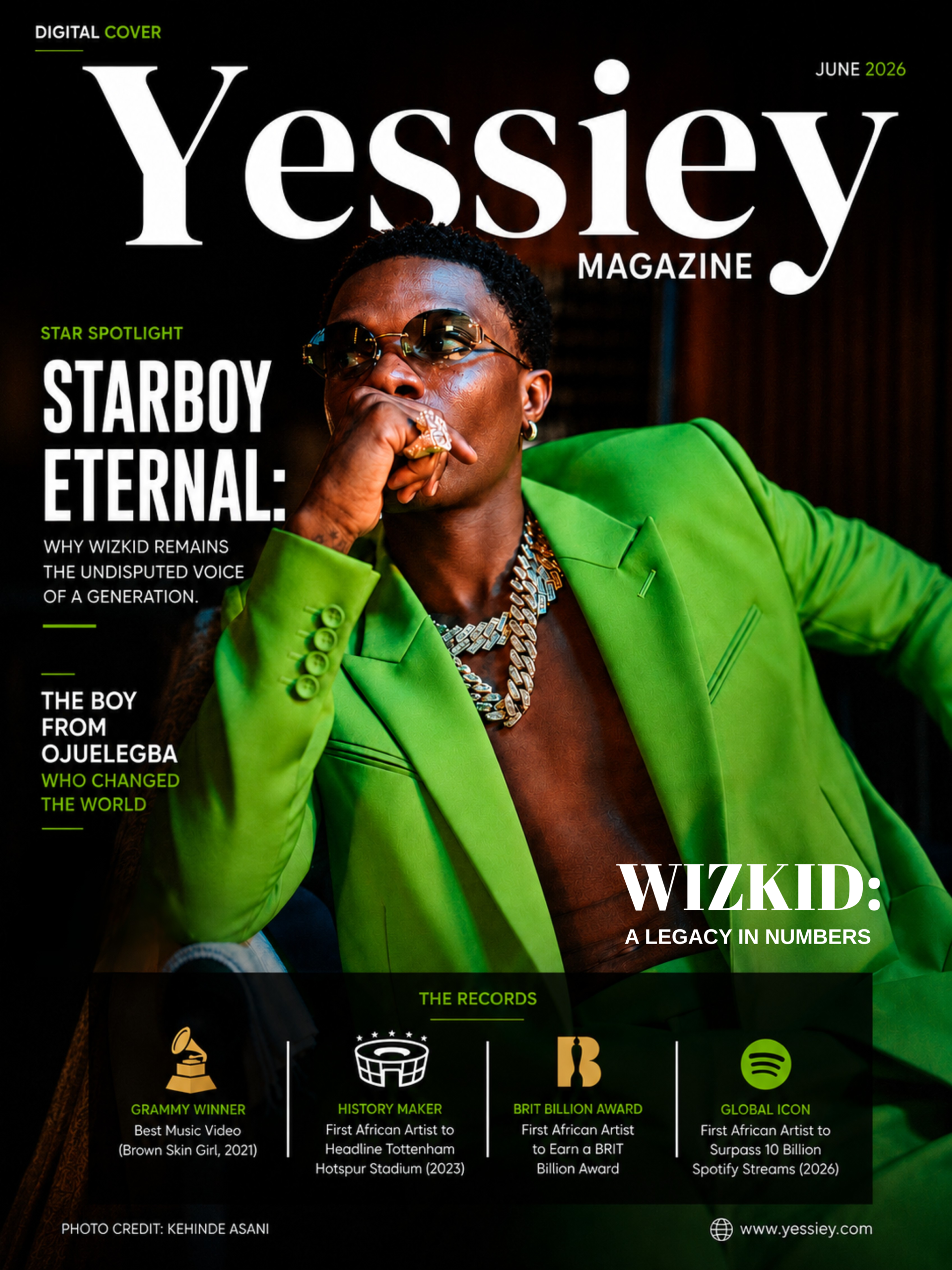
At the 63rd Grammy Awards in 2021, Wizkid won Best Music Video for “Brown Skin Girl” alongside Beyonce and Blue Ivy. It was his first Grammy, and he has received six nominations to date. Western award institutions had overlooked Afrobeats for years; the win carried weight far beyond one artist.
First through the door, again
On July 29, 2023, Wizkid played a sold-out Tottenham Hotspur Stadium in London, the first African artist to headline the venue. The same occasion made him the first African artist to receive the BRIT Billion award, which recognises one billion streams in the UK.
The milestones kept coming. He is the most awarded African artist in the history of the BET Awards, the Soul Train Awards, the Billboard Music Awards, the iHeartRadio Music Awards, the NAACP Image Awards and the MOBO Awards. His most recent win was the NAACP Image Award for Outstanding Duo, Group or Collaboration (Contemporary) for “Piece of My Heart” with Brent Faiyaz.
Durability is the real flex
In 2025, without releasing an official solo single or album, Wizkid was the most-streamed Nigerian artist on both Apple Music and Spotify, and 25 of his songs ranked among the most streamed songs on Apple Music Nigeria. His album Morayo was the most-streamed album in Nigeria and Sub-Saharan Africa on Apple Music a full year after its release.
By January 2026 he had become the first African artist to pass 10 billion streams across all credits on Spotify. A catalogue only holds up like that when people keep coming back to the records.
More than music
In 2021, Billboard wrote that Wizkid “is the first African artist to truly make a major pop breakthrough in the United States and seems best poised to do so globally, too.”
He once put his own ambition more simply: “I’m an African. I ride for that… If the world can pay attention to one artist from Africa, why can’t they pay attention to all?”
That question has an answer now. The world listens, and the Starboy is still recording.